



Indonesia is entering a more practical phase of digital commerce. The central question is no longer whether consumers will use digital services, but how businesses can turn digital adoption into reliable, repeatable physical retail operations.
That shift matters for smart vending. Recent discussions at the Indonesia Economic Forum, the Indonesia Economic Summit, and World Economic Forum dialogues on ASEAN’s digital economy have repeatedly emphasized private-sector participation, operational efficiency, interoperability, and simpler access for small and medium-sized businesses. Together, these themes point to a favorable—but execution-sensitive—outlook for unattended retail in Indonesia.
WHY THE MARKET OUTLOOK IS STRENGTHENING
Indonesia combines a large consumer base, dense urban activity, fast-growing digital payment habits, and a geography that rewards decentralized retail formats. The IMF’s 2025 Article IV consultation projected growth of 5.1% for 2026 while also warning of external uncertainty. For B2B investors, this supports a disciplined view: demand conditions are resilient, but expansion should be based on site economics and operating data rather than headline growth alone.
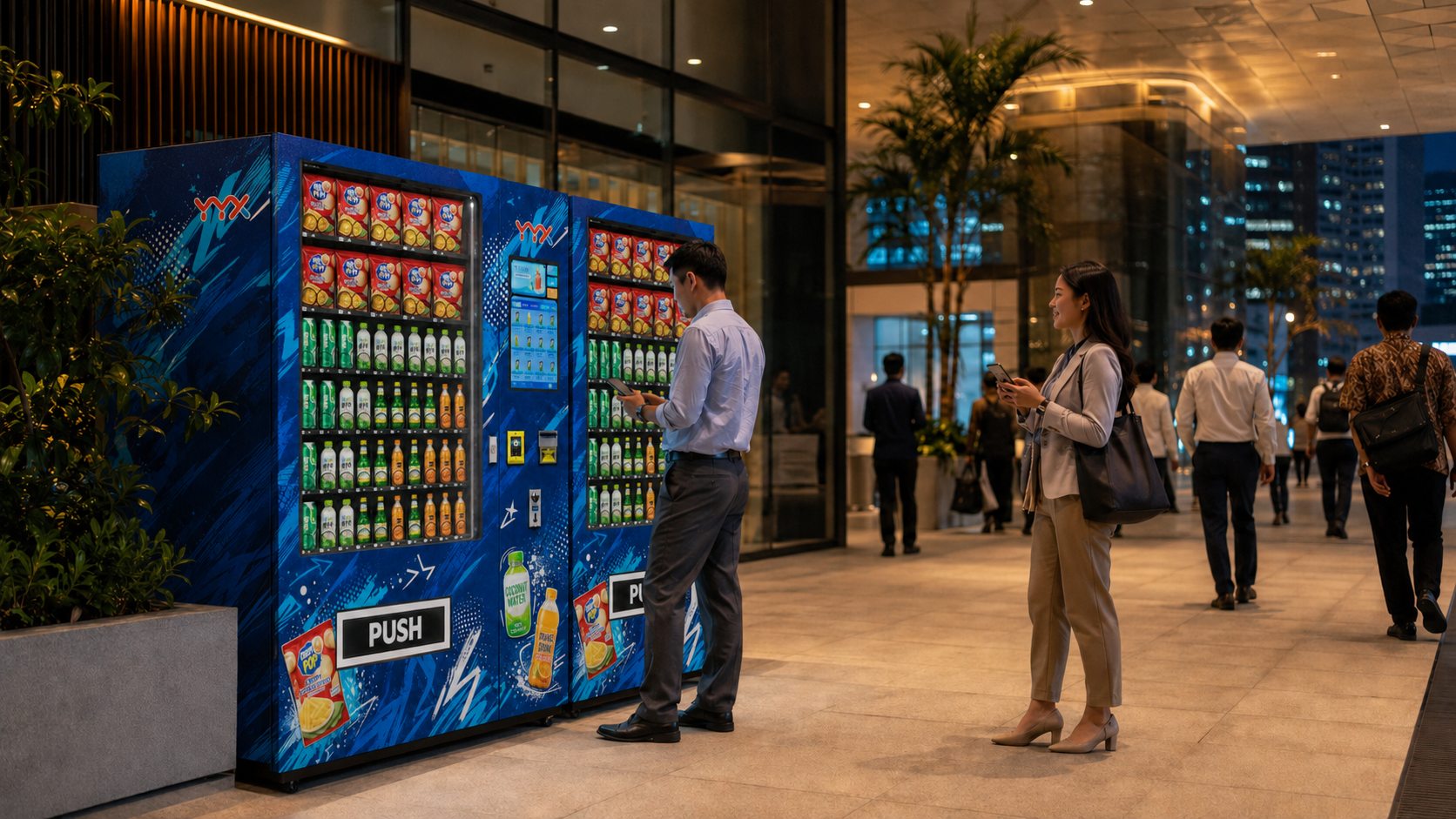
Payments are one of the clearest enablers. Bank Indonesia reported that QRIS had reached 57 million users and 39.3 million merchants by the first half of 2025, with 93.16% of those merchants classified as micro, small, and medium-sized enterprises. A market already accustomed to QR-based payment reduces consumer education friction and makes self-service purchasing more natural.
Regional integration adds a longer-term tailwind. World Economic Forum coverage of the ASEAN Digital Economy Framework Agreement noted that ASEAN’s digital economy could reach US trillion by 2030—and potentially US trillion with effective implementation. This is a regional projection, not a vending-market forecast, but it signals a larger ecosystem of digital payments, data connectivity, and cross-border business activity in which smart retail can participate.
INDONESIA’S DIGITAL MOMENTUM CREATES OPPORTUNITY, BUT SMART VENDING SUCCESS STILL DEPENDS ON LOCAL EXECUTION.
WHERE SMART VENDING CAN CREATE THE MOST B2B VALUE
Indonesia should not be treated as one uniform market. The strongest early opportunities are locations where convenience has a measurable value and where a local team can maintain service quality.
- Transport hubs and mobility corridors, where speed, availability, and compact footprints matter.
- Universities, hospitals, factories, and office campuses with recurring daily traffic and limited after-hours retail.
- Shopping malls, hotels, and mixed-use developments seeking new amenities without adding a full staffed store.
- Residential communities and secondary-city commercial centers where 24/7 access can extend retail coverage.
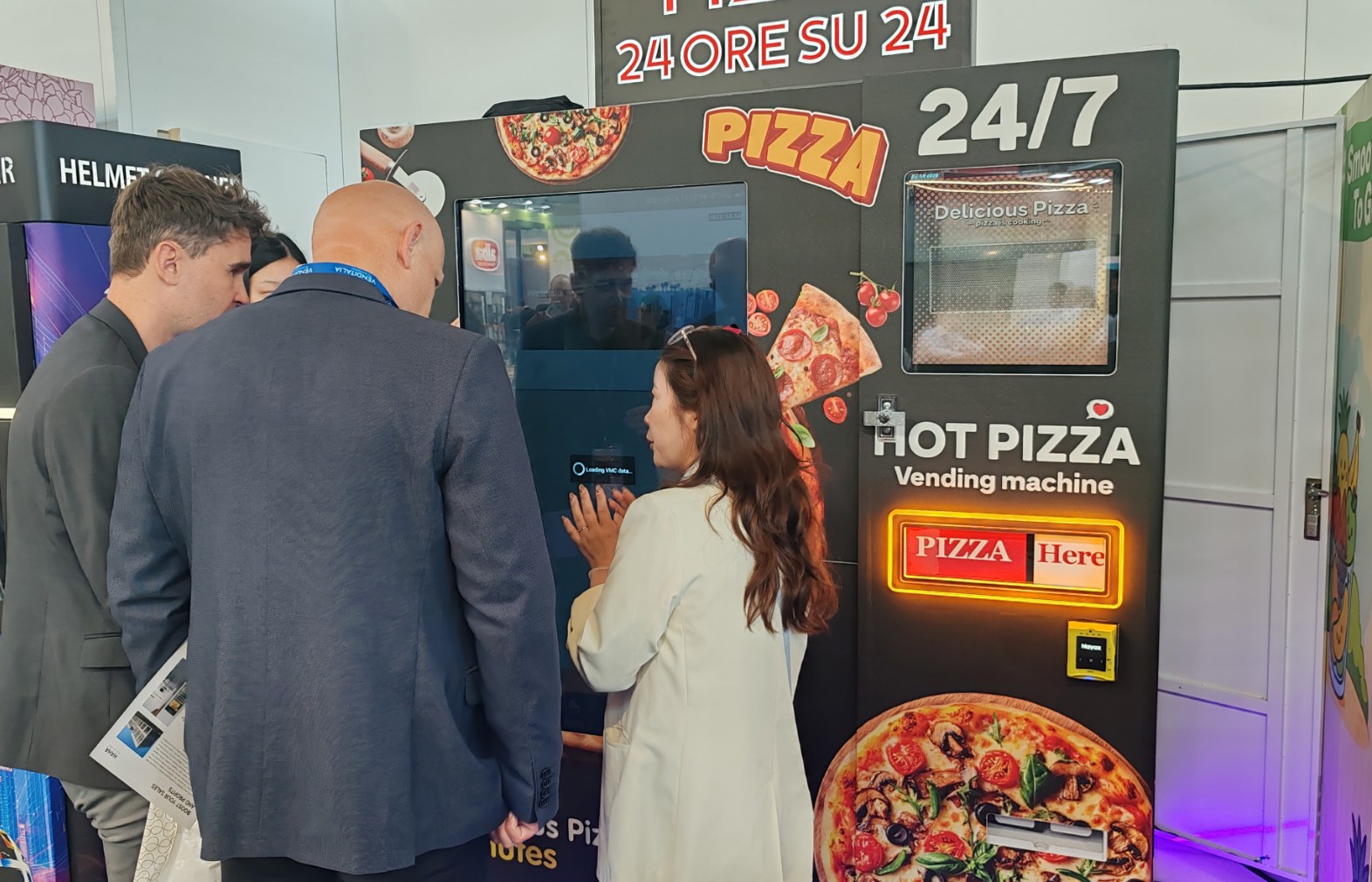
- Specialty concepts—including flowers, beverages, ice cream, pizza, perfume, and helmet-care services—where differentiation can protect margins better than a generic snack-only proposition.
The B2B opportunity is therefore broader than selling machines. Property owners can monetize underused space; established distributors can add an intelligent equipment category; retail brands can test new locations with lower fixed overhead; and operators can build recurring revenue networks with centralized data visibility.
WHAT BUSINESS BUYERS SHOULD REQUIRE FROM A SUPPLIER
A credible Indonesia strategy requires equipment that can be adapted to the business model—not a one-size-fits-all cabinet. Shenzhen Youyixuan Intelligent Technology develops smart vending solutions across multiple categories and supports configuration for different products, temperature requirements, payment environments, and commercial scenarios.
For B2B partners, the practical advantages include:
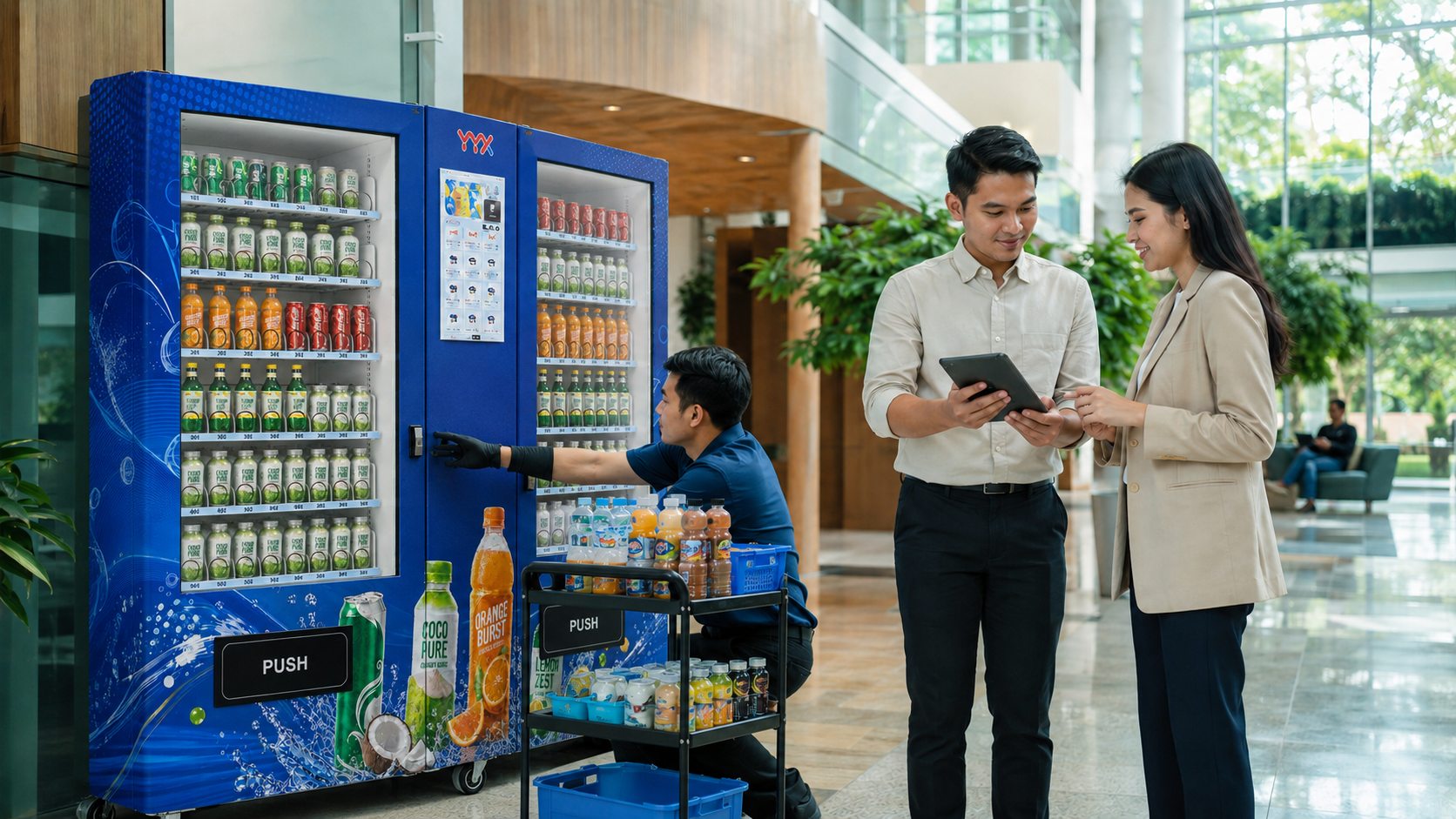
- Remote visibility into equipment status, orders, and operating data, helping lean teams manage multiple sites.
- Flexible product configurations for standard packaged goods and differentiated specialty retail concepts.
- Support for localized payment integration and connected operation through Wi-Fi or 4G, subject to the selected local payment service provider and project configuration.
- Customization for cabinet layout, appearance, voltage, and user flow to match a partner’s venue and brand requirements.
- A pilot-first approach that allows operators to validate traffic, conversion, product mix, refill frequency, and service cost before committing to a wider rollout.
- Technical and after-sales coordination designed for long-term equipment operation rather than one-time delivery.
A MARKET WITH POTENTIAL—BUT NOT A SHORTCUT
Indonesia’s smart vending outlook is attractive because the enabling conditions are becoming stronger. However, success will depend on local execution: choosing the right venue, integrating appropriate payment methods, maintaining reliable replenishment, complying with product and import requirements, and responding quickly when equipment needs service.
For distributors, operators, property groups, and retail brands, the most credible entry strategy is to define one use case, launch a controlled pilot, review real operating data, and scale only after the unit economics are proven.
PILOT → MEASURE → OPTIMIZE → SCALE
Youyixuan’s role is to help B2B partners translate an opportunity into an operable system—combining suitable hardware, connected management, customization, technical coordination, and commercial thinking.
That is how trust is built: through clear responsibilities, measurable results, and equipment designed for the realities of local operation.
EXPLORE SMART VENDING OPPORTUNITIES IN INDONESIA
Interested in evaluating a smart vending project in Indonesia? Contact Shenzhen Youyixuan Intelligent Technology to discuss product selection, site scenarios, customization, and pilot planning.
SOURCE CONTEXT
IMF — 2025 Article IV Consultation with Indonesia
Bank Indonesia — QRIS Jelajah Indonesia 2025
World Economic Forum — ASEAN Digital Economy Framework Agreement
Indonesia Economic Summit 2025