


What Should Artificial & Everlasting Flower Businesses Consider When Choosing a Flower Vending Machine — and What Can It Bring to Their Business?
A practical guide to product fit, payment, branding, remote management, location validation and scalable 24/7 floral retail.
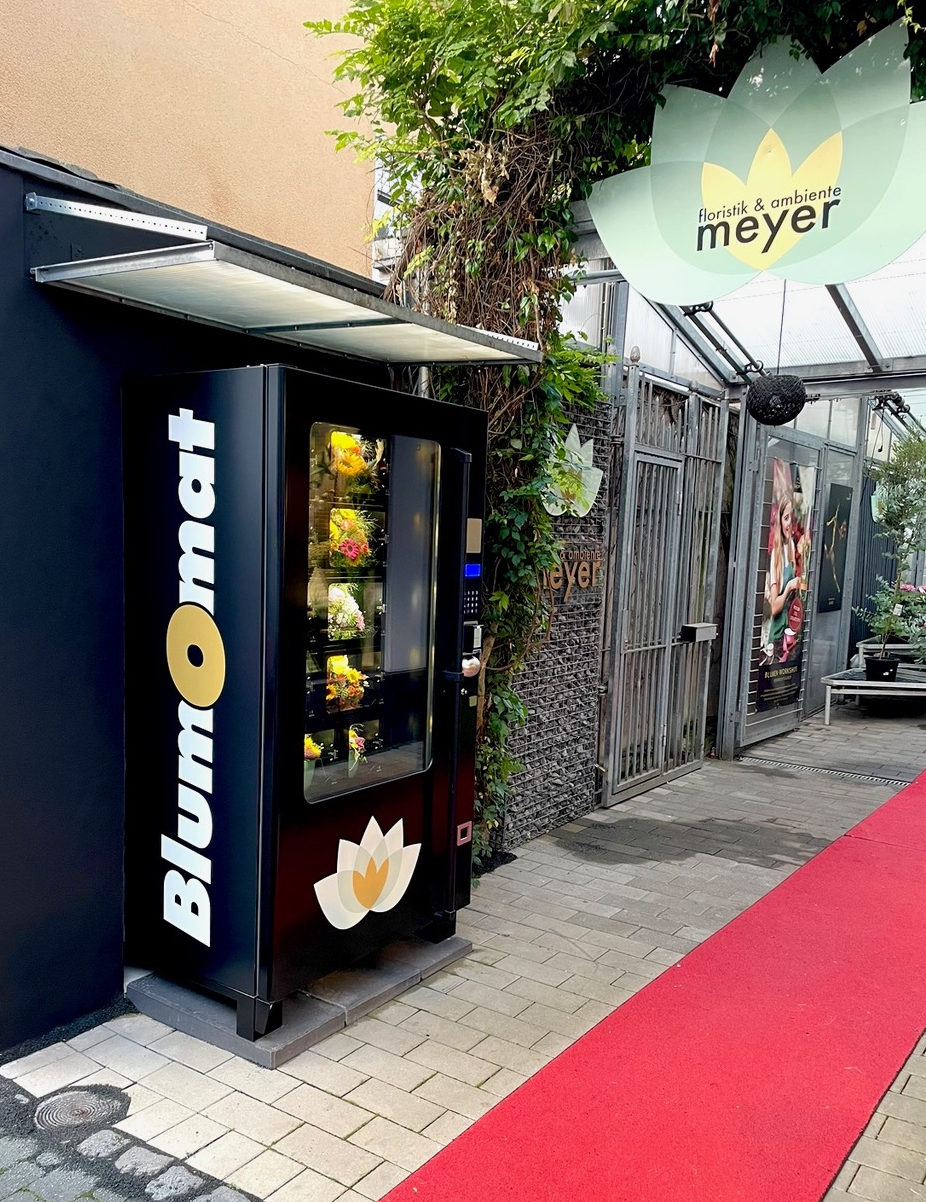
As unmanned retail expands into shopping centres, hospitals, hotels, transport hubs, office buildings and other commercial spaces, the role of a flower vending machine is changing.
For businesses specialising in artificial flowers, everlasting flowers, preserved floral arrangements and luxury floral gifts, the machine is no longer simply a cabinet that dispenses products. When properly designed, it can become a 24/7 micro-store that combines sales, brand exposure and customer acquisition.
Recently, we worked closely with a UK luxury floral business on a customised flower vending machine project. The plan is to begin with one pilot machine in the UK, evaluate real operating results and customer behaviour, and then consider expansion to additional locations.
That process reinforced an important point:
For serious B2B buyers, the purchase price of the machine is only one part of the decision.
The more important question is whether the machine fits the products, brand, payment environment, operating model and future expansion strategy of the floral business.
1 | The Flowers Should Determine the Machine — Not the Other Way Around
Luxury artificial and everlasting flower arrangements are often very different from standard fresh bouquets. They may be wider, taller, more structured, or presented in premium boxes, decorative wrapping and gift packaging.
That means one of the first technical questions should be:
Will the actual internal compartment dimensions accommodate the products I already sell?
A lower-priced machine has little commercial value if the compartments are too small and force the florist to redesign its best-selling arrangements simply to fit the equipment.
The correct process should begin with the products: measure the typical bouquet or arrangement dimensions, identify the largest products that should be sold through the machine, and then determine the appropriate compartment structure.
For the UK project, the final configuration uses 8 usable flower compartments numbered 01–08, together with an integrated touchscreen and control section. Customers select the corresponding numbered compartment on the touchscreen, complete payment and collect the product.
The objective is not to maximise the number of doors. The objective is to make sure every selling compartment is commercially useful.
Product first. Machine configuration second.
2 | Artificial and Everlasting Flowers May Not Require Refrigeration
Fresh flowers often require refrigeration and temperature management to preserve quality. Artificial, everlasting and many preserved floral products can have very different storage requirements.
If refrigeration is not necessary for the products being sold, there may be little reason to add a compressor and cooling system simply because the equipment is called a flower vending machine.
Removing unnecessary refrigeration may help reduce:
· Initial equipment investment
· Electricity consumption
· Routine maintenance requirements
· The number of mechanical components that may eventually require service
· Installation complexity in some locations
This is an important principle for customised vending projects: the configuration should follow the actual product and business requirement.
Do not pay for functions your business does not need.
At the same time, businesses selling preserved or specialty floral products should confirm their own storage requirements before deciding whether temperature or humidity control is necessary.
3 | Design Can Turn the Machine Into a 24/7 Branded Boutique
For premium floral businesses, appearance is not a secondary consideration. It is part of the commercial value of the machine.
During the UK project, considerable attention was given to the warm taupe/beige colour palette, floral line artwork, illuminated branding, exterior vinyl design, touchscreen interface and consistency of the brand monogram.
Why does this matter?
Because a vending machine installed in a premium shopping centre, hotel, hospital or commercial location is doing more than completing transactions.
It can simultaneously become:
A sales point + a brand advertisement + an offline customer-acquisition channel.
A customer may buy immediately. Another person may simply notice the brand, scan a QR code, visit Instagram, browse the company website or remember the name for a future gift purchase.
For premium artificial and everlasting flower brands, the exterior should therefore be approached almost like the design of a small physical boutique. Lighting, colour, graphics, product visibility, touchscreen design and brand consistency all influence the customer's perception before the first purchase is made.
The machine should look like part of the brand — not like generic equipment with a logo added afterwards.
4 | Local Payment Habits Must Be Considered Before Deployment
International vending projects require more than asking whether the machine can accept cards.
For the UK market, for example, a buyer may want to consider contactless bank-card payments, Apple Pay, Google Pay and other payment methods familiar to local customers.
But the payment terminal is only one part of the process. Buyers should also clarify the merchant account, KYC requirements, activation process, transaction settlement, payment fees and the responsibilities of each party.
Before deployment, every overseas vending project should clearly answer three questions:
· Who supplies and integrates the payment hardware?
· Who is responsible for merchant-account activation and KYC?
· Which account ultimately receives the customer's payment?
These details directly affect how quickly a machine can move from delivery to real commercial operation.
A machine that has arrived but cannot process local payments is not yet an operating retail location.
5 | Remote Management Becomes More Valuable as the Business Expands
Managing one vending machine manually may be relatively simple. Managing 5, 10 or 50 machines across different locations is a very different operational challenge.
A scalable vending business should be able to remotely understand key information such as sales performance, product pricing, inventory status and machine operation.
This allows the operator to make better decisions without physically visiting every location simply to understand what is happening.
For example, remote data can help a business identify which floral products sell fastest, which price points perform better, when replenishment may be required and which locations deserve further investment.
This is where the value of smart vending extends beyond labour savings.
The goal is not simply to remove staff. It is to give a business the ability to replicate sales locations with a much lighter operating structure.
6 | The First Machine Should Validate the Location — Not Just the Equipment
For businesses entering automated flower retail for the first time, beginning with one pilot machine can be more useful than immediately purchasing multiple units.
The reason is simple: the machine is only one variable in the business model.
Actual performance may depend on:
Location + Foot Traffic + Customer Profile + Product Pricing + Product Mix + Replenishment Frequency + Purchasing Behaviour
Shopping centres, hospitals, hotels, office buildings, universities and transport hubs may all be potential locations. However, high foot traffic alone does not guarantee strong sales.
For premium artificial or everlasting flower brands, the better question is:
Does this location provide the right customers for the brand and its price positioning?
A premium arrangement may perform very differently in a luxury hotel, a hospital entrance, a commuter hub and a neighbourhood shopping centre, even if the daily foot traffic appears similar.
A pilot allows the operator to replace assumptions with real data. After several weeks or months, the business can evaluate sales by day and time, popular products, average order value, replenishment patterns and customer response.
That information is far more valuable when deciding whether to expand.
7 | Product Presentation and Replenishment Should Be Designed as Part of the Business Model
A flower vending machine is also a visual retail display. Empty compartments, inconsistent packaging or poorly positioned arrangements can reduce the premium impression of the entire installation.
Before launch, the operator should think about how products will be displayed, how often compartments will be replenished, which price ranges should be offered and whether the assortment should change by location or season.
Artificial and everlasting flowers have an important advantage here: compared with fresh flowers, many products can remain saleable for longer periods and may create less pressure for daily replenishment.
That can make automated retail particularly interesting for floral gift businesses, but the assortment still needs active management.
The machine should not become a static cabinet. It should be treated as a small retail location with its own merchandising strategy.
8 | After-Sales Support and Maintainability Matter
For an overseas buyer, equipment reliability is important, but so is the ability to solve problems when they occur.
Before purchasing, businesses should understand how technical support is provided, which components can be replaced modularly, whether spare parts are available, and how remote diagnosis is handled.
This matters especially when the machine is installed in a high-value commercial location. A machine that remains out of service for an extended period does not only lose sales; it can also affect the customer's perception of the brand and the confidence of the location partner.
For that reason, maintainability should be considered before deployment rather than after the first fault occurs.
What Can a Flower Vending Machine Ultimately Bring to a Floral Business?
Traditionally, expanding a flower business often means opening another physical shop. That may involve additional rent, renovation, employees, utilities, management time and long-term commitments.
Automated retail creates another possibility:
A smaller-format branded sales point that can operate 24/7.
This can be particularly interesting for artificial, everlasting and decorative floral products because they generally have a longer selling life and may require less environmental control than fresh flowers.
A well-planned flower vending machine can potentially help a brand:
· Extend selling hours beyond traditional store opening times
· Enter locations where a full flower shop may not be practical
· Reduce dependence on on-site sales staff
· Increase offline brand exposure
· Connect physical customers with Instagram, websites and online stores
· Test new markets and locations before making larger investments
· Create an additional sales channel alongside the existing shop and e-commerce business
From One Pilot Machine to a Repeatable Retail Model
The strongest opportunity may appear after the first location has been validated.
Instead of treating every new machine as an isolated equipment purchase, the business can begin building a repeatable operating model:
1 Pilot Machine → Validate Location & Products → Analyse Sales Data → Optimise Product Mix → Replicate Successful Locations
This is fundamentally different from simply buying vending equipment. The objective is to discover a combination of location, product assortment, pricing, branding and operations that can be repeated.
That is why I do not see flower vending machines as a replacement for flower shops or e-commerce.
I see them as a third sales channel between the two:
A 24/7 unmanned micro-store that can sell products, display the brand and continuously connect with customers.
Final Question for Flower Businesses
For flower businesses considering automated retail, perhaps the first question should not be:
"How much does a flower vending machine cost?"
A better question may be:
"What role could a 24/7 automated retail location play in the future growth of my brand?"
Once that role is clear, decisions about compartment size, refrigeration, payment, branding, software, location and investment become much easier to evaluate.